

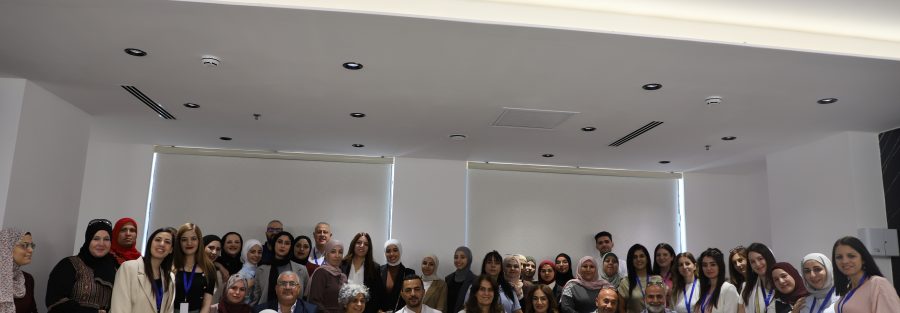
On a remarkable day that brought together intellect, achievement, and a vision for a better future, we celebrated the launch of the book “Applied Psychology Villages: Pathways of Change and Development” on Wednesday, July 16, 2025. This publication reflects the ongoing efforts and dedication to advancing the field of applied psychology in service of Palestinian society. The book comprises five comprehensive chapters, addressing key themes such as psychological assessment tools, intervention strategies, capacity-building for psychologists, working with children and families, and the future of psychological practices tailored to the Palestinian context. It serves as a practical and academic reference for psychologists and professionals in the field.
The event was attended by the presence of project funders, including Dr. Ibrahim Khamis, Director of Mental Health Services at the Palestinian Ministry of Health, and Ms. Mariam Samara Awad, Chair of the Board of Directors, alongside board members: Mr. Vladimir Kharov, Treasurer; Dr. Osama Mansara; and the center’s management represented by Mr. Ghaleb Ghattas, Administrative and Financial Director, and Ms. Mirna Jarayseh, Professional Director, as well as all staff of the Guidance and Training Center for The Child and Family Association, the driving force behind this significant event. Also in attendance was Ms. Aisha Mansour, Executive Director of Medical Aid for Palestinians (MAP), whose inspiring remarks enriched the ceremony. The program featured multiple segments, beginning with an opening address by the Chair of the Board, followed by speeches from Ms. Aisha Mansour (MAP), psychologist Ms. Rania Makkakr, and representatives from the Palestinian Union of Social Workers and Psychologists (PUSWP): Ms. Fidaa Al-Lahham (Bethlehem Union) and Mr. Odai Al-Daghamin (Hebron Union). Their moving words emphasized the book’s role in enhancing the quality of psychological interventions and advancing professional practices. The event also included diverse presentations and discussions on assessment and intervention tools, licensing requirements for psychologists, future training needs, and interactive dialogue sessions. These discussions highlighted key recommendations from attendees, forming the foundation for a future developmental roadmap.
We extend our deepest gratitude to representatives of local and international institutions, Palestinian universities, mental health specialists, and PUSWP delegates whose contributions elevated the discourse and shed light on new avenues for expanding this work to better serve our society. Special thanks to the social workers’ and psychologists’ unions in Bethlehem, Hebron, Al-Eizariya, and Ramallah for their active participation, invaluable support, and insightful input, which underscored the importance of collaboration in advancing Palestine’s mental health sector. This achievement places upon us a professional and ethical responsibility to continue refining the book’s content to meet evolving societal needs, ensuring its sustainability and real-world impact. We are confident that future editions will become a widely adopted practical tool for psychologists across Palestine. Our profound thanks go to Medical Aid for Palestinians (MAP), the project’s primary funder, whose steadfast support was instrumental in this achievement. We also acknowledge the efforts of all contributors under the supervision of the Guidance and Training Center for the child and family, including past and present staff, whose expertise brought this work to fruition.
 English
  Arabic